
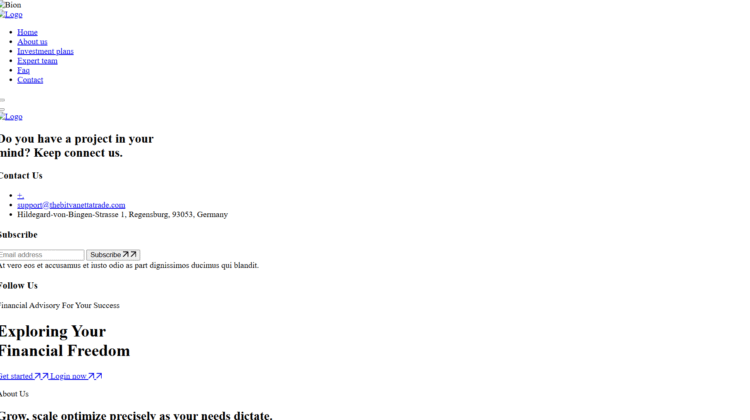
Thebitvanettatrade.com Review : Exposed Platform
Introduction
Thebitvanettatrade.com (operating under names like “Bit Vanetta Limited” and variants such as en.thebitvanettatrade.com) presents itself like many online crypto/CFD investment platforms: a professional homepage, screenshots of dashboards, and marketing copy promising flexible investment packages and quick withdrawals. On surface inspection the site looks modern, and that’s intentional — slick design lowers suspicion. But there are immediate technical and reputational warning signs beneath that veneer: the site is young, WHOIS records are masked, it shares servers with other low-trust domains, and online “trust” checkers flag it for risk.
What regulators and watchdogs are saying
This isn’t just the opinion of anonymous reviewers. Formal warnings and notifications have been issued to or about the platform by recognized authorities:
-
The International Securities & Commodities Alerts Network (I-SCAN / IOSCO) lists Bit Vanetta Limited as an unregistered/unlicensed entity offering financial products, with a published alert referencing the platform. That’s a major red flag: legitimate investment firms must be registered with relevant national authorities.
-
The Bank of Russia (CBR) flagged THEBITVANETTATRADE.COM and related domains, identifying signs of a financial pyramid. That’s a specific allegation — not merely “unknown” but potentially structured as a Ponzi-style scheme.
-
Independent site-scanners and scam-checker services report low trust scores, negative user reports, and technical indicators (shared server with many low-trust sites, recent domain registration, masked registrant) commonly associated with scam operations.
-
Taken together, these are not isolated complaints; they form a pattern: an attractive marketing front, non-transparent ownership, placement on regulator watchlists, and crowd signals of abuse.
Common scam mechanics I observed (and what they mean for you)
From the combination of public warnings and the platform’s behavior, Thebitvanettatrade.com appears to follow a familiar scam playbook. Here’s what that usually looks like in practice:
-
High-pressure onboarding & deposit offers
Users are enticed with fast onboarding, “guaranteed” returns, or bonus incentives to deposit quickly. These tactics push people to act before doing due diligence. -
Difficulty withdrawing funds
After initial deposits (sometimes small), the system may allow a tiny withdrawal to build trust, then block larger withdrawal attempts — often citing “verification” or “system fees.” -
Account managers and social engineering
Complaints about aggressive account representatives are typical: they push more deposits, create urgency, or use fabricated documents to explain delays. -
Multiple brand fronts and cloned domains
Scammers often spin up many near-identical sites to avoid blocks or to keep operating if one domain is taken down. Shared servers and multiple similar domains tied to this operation were detected by scan services. -
Regulatory evasion
The platform is reported as unregistered/unlicensed by enforcement channels. Operating without proper licensing is illegal in many jurisdictions and removes consumer protections. If you see even a couple of those behaviors, treat the operation as highly suspect.
Real user signals — what people report
On independent review trackers and scam databases, entries for Thebitvanettatrade.com or closely named domains show several concerning patterns:
-
Rapidly appearing negative reviews and complaints about blocked withdrawals.
-
Low user traffic overall (scammers create appearance, not long-term, organic user bases).
-
Multiple “client portal” or mirror domains that mimic the main site — a sign of serial abuse.
-
While some review platforms have sparse data (and a few positive reviews can appear), the regulator notices carry far more weight than isolated promotional testimonials.
How the scam operators try to look legitimate — and how to see past it
Scam sites invest heavily in the illusion of legitimacy. Here’s how they attempt to trick you — and the exact counterchecks that expose the illusion:
-
Claimed professional addresses or company names: check the national business registry in the jurisdiction claimed. If the company isn’t listed, that’s a fail. (Regulatory alerts already list this platform as unlicensed.)
-
Polished dashboards and “client area”: UX polish doesn’t equal legal compliance. Look for regulatory numbers (license identifiers) and verify them on the regulator’s website.
-
Testimonials and “proofs”: screenshots can be fabricated. Ask for verifiable, dated records that can be corroborated independently.
-
Masked WHOIS or offshore registries: legitimate, regulated firms rarely hide ownership. Masked registration plus recent domain creation is a technical signal of risk.
-
If the platform fails these checks, treat any money sent as at extremely high risk.
What to do if you’ve interacted with them
-
Stop further deposits immediately.
-
Document everything: emails, chat transcripts, transaction IDs, screenshots, dates and amounts.
-
Contact your bank or payment provider and ask about chargeback options if you used cards or wire transfers.
-
Report to your local financial authority and to consumer fraud reporting services in your country — regulatory reports build enforcement cases. The platform already appears on several official watchlists, which helps investigators.
Hard truth: money recovery is difficult (important warning)
Recovering funds from platforms like this is often very hard. Scammers use cryptocurrency, offshore shells, and fast-moving transfers that make tracing and reversal slow or impossible. Even when authorities act, they frequently seize only a small fraction of stolen funds. That’s why prevention and early action matter more than attempts to claw money back later. The public regulator listings and blacklistings for this platform underscore that recoveries will be legally and logistically challenging.
Final verdict — how I’d summarize the risk
Thebitvanettatrade.com (Bit Vanetta Limited and related domains) shows multiple, independent indicators of a fraudulent or at-minimum high-risk operation: regulator warnings naming it as unlicensed, national authority alerts suggesting pyramid signs, and technical/reputational flags from independent scanner services. Combined, these signals strongly counsel against any financial engagement.
Quick checklist before you ever hand over money to an online investment site
-
Is the firm registered with a recognized regulator (and does the license number verify)?
-
Do independent sources (regulators, i-scan, national watchdogs) show warnings?
-
Is domain WHOIS public and longstanding rather than brand-new and masked?
-
Are withdrawals documented and fast for many independent users (not just promotional screenshots)?
-
Did you confirm identity and licensing on the regulator’s website, not only on the platform’s “About” page?
If you answer “no” or “I don’t know” to any of the above, treat the site as untrustworthy.
Conclusion: Report Thebitvanettatrade.com Scam to AZCANELIMITED.COM?
Based on all available data and warning signs, Thebitvanettatrade.com raises multiple red flags that strongly suggest it may be a scam. From its unregulated status to its anonymous ownership and unrealistic promises, this platform lacks the transparency and trustworthiness expected from a legitimate financial service provider.
REPORT THIS PLATFORM TO AZCANELIMITED.COM
If you’re thinking of investing through Thebitvanettatrade.com, extreme caution is advised.
