
Carrendor.com Review : Exposed Fraudulent Platform
Introduction
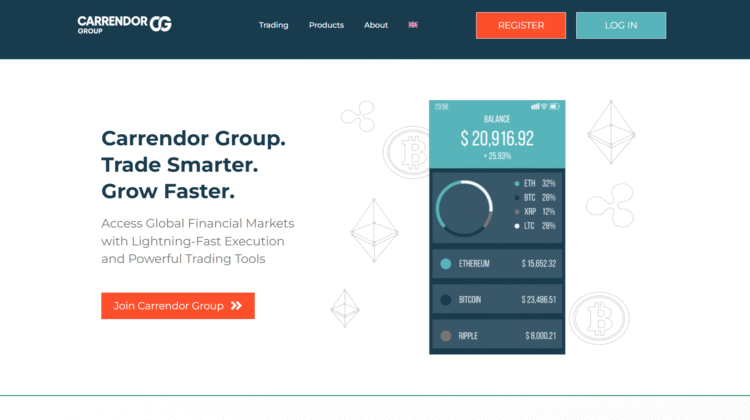
Carrendor.com presents itself as a global investment/trading platform, claiming access to forex, commodities, cryptocurrencies and high-yield “advanced trading tools”. On the surface the website appears modern, with promises of high returns, dedicated “account managers” and slick marketing. But behind the façade, multiple flags have emerged.
1. What users are reporting
Several recurring complaints and red-flags from users and third-party watchdogs:
-
Many investors allege that after making initial deposits, their withdrawal requests are either blocked, delayed indefinitely or require “additional fees” before funds are released.
-
Independent ratings of the website give it a very low trust score. For example, one site rated carrendorgroup.com with a trust score of 1/100 and flagged it as “suspicious domain”.
-
A regulatory body (the Financial and Consumer Services Commission of New Brunswick) issued a caution stating Carrendor is not registered to deal or advise in securities or derivatives in their jurisdiction, and therefore dealing with it exposes investors to risk.
-
The website’s domain appears very recent (only a few months old at the time of review) and the owner’s details are anonymised/hidden, which is unusual for a regulated investment business.
-
Marketing materials promise “risk-free”, “very high returns” and “exclusive opportunities”—which many veterans say are classic hallmarks of high-risk or fraudulent operations.
2. Key red-flags and concerns
Here are the major warning signals picked up in the case of Carrendor.com:
a) Lack of regulation / registration
A legitimate investment firm usually discloses its regulatory licence, audit details, registered address, and names of directors. Carrendor is reported to claim London (UK) as location, but no verifiable registration/licensing certificate is publicly confirmed. The regulatory warning from the New Brunswick regulator noted the company is not registered.
This absence means no formal investor protection, which is a major concern.
b) Very young domain / hidden ownership
The website domain for Carrendor was shown to be just a few months old, and WHOIS data is privacy-protected. Such anonymity plus youth of domain often correlates with high-risk or scam websites in the investment space.
c) Promises of high or guaranteed returns
Carrendor’s marketing reportedly emphasises “smarter trading”, “automated strategies”, “exclusive investment opportunities” and suggests ease with minimal effort. True financial markets are volatile and cannot guarantee stable high returns. So the guarantees or super-high returns are a yellow/red flag.
d) Pressure to deposit more, refusal or obstruction of withdrawals
Reports indicate that after initial deposits and some short-term positive balances, greater profits are promised if more funds are committed. Then when a withdrawal is requested, the platform allegedly imposes new hurdles: extra verification, “fees”, “taxes”, or claims of “locked profit” until further deposit. This pattern is very characteristic of broker-scam operations.
e) Very low independent reputation/trust metrics
Website-reputation services flagged Carrendor.com domain as high-risk: for example, the site had minimal inbound links, very low traffic ranking, and multiple automated tools assign extremely low trust scores. One such report: “the identity of the owner of the website is hidden … we advise you to really take the time to check … before you interact.”
Such independent risk assessment strengthens the concern.
f) Marketing-heavy but little transparency
The site reportedly focusses heavily on promotional testimonials, pictures of big returns and “success stories” but lacks transparent public disclosure of audited performance, regulatory oversight, or independent verification of claims. In many cases, the testimonials appear vague or unverified.
3. How the scheme appears to operate (based on reported patterns)
Though I can’t confirm the internal functioning, user reports suggest a typical run-through:
-
Initial engagement & deposit – The platform lures users via adverts or outreach promising “try with small deposit” and “see immediate returns”.
-
Fake short-term gains – After depositing, users may see their account credited with “profits” or a rising “balance” to build confidence.
-
Upsell heavier investment – An agent or “account manager” contacts the user saying: “Now you’ve seen initial success, move to level 2, invest X more, withdraw bigger sum.”
-
Withdrawal request triggers obstacles – When user seeks to cash-out, the firm raises new preconditions: extra fees, locked funds, sudden KYC/AML delays, alleged tax/“insurance” payment etc.
-
Communication breakdown / disappearance – Either the platform collapses, or the user is ignored/permanently blocked, while funds are gone. The operators may move domain, remove website, or vanish.
In many such schemes the operators rely on new deposits to pay earlier “profits” (Ponzi-style) until it unravels.
4. Why Carrendor.com stands out as high-risk
-
The combination of “unregistered”, “young & hidden domain”, “withdrawals problematic” and “high return promises” makes the risk very high.
-
The official regulator’s public caution adds serious weight.
-
Independent reputation ratings (very low trust scores) provide technical confirmation of strong indicators of risk.
-
In the investment/trading domain, the pattern of deposit-gain-request withdrawal-obstruction is one of the most common scam methods.
If you evaluate the overall risk profile, Carrendor.com meets multiple major danger criteria on independent checklists for fraud/prone platforms.
5. What a potential investor would typically see
From a user perspective, the experience might go like this (based on reported stories):
-
You are contacted via social media, email, or the site after showing interest in “crypto trading” or “automated high-yield trading”.
-
The website emphasises modern infrastructure, state-of-the-art tools, “elite account managers”, “24/7 trading desk”, etc.
-
You deposit a modest amount (say a few hundred or thousand dollars) via bank transfer or cryptocurrency.
-
Your account shows a rising balance, your “account manager” encourages you to deposit more to “unlock full capability” or “maximize profits”.
-
Once you request the withdrawal of either the initial deposit or profits, you are told additional fees/taxes/insurance must be paid first. Possibly you’re told KYC originally wasn’t complete so must still provide more documents or pay a “processing fee”.
-
If you stop depositing or persist claiming withdrawal, the interface may freeze, messages stop, or you are given a new pretext for delay. The website may eventually become unreachable or withdraw your bulk of funds.
6. Why this matters — the broader consequences
-
Financial loss — users can lose not just their profit but often their entire deposit.
-
No recourse — if the platform is unregulated/unregistered, there is minimal or no standard investor protection, compensation scheme or oversight body to appeal to.
-
Data exposure — submitting funds or identity documents may give scammers access to further misuse.
-
Reputational and stress costs — beyond money, victims often feel shame, anxiety and find it hard to report since they may have acted outside regulated channels.
7. Final verdict
While I cannot categorically say “ Group is definitively a fraud” (only a court or regulator could make final pronouncements), the weight of evidence strongly suggests that it is a very high-risk investment operation, with multiple red flags consistent with known scam-models.
If this were a scale of risk, it falls near the top end of concern: unregistered, hidden ownership, new domain, high-risk marketing, withdrawal complaints and official regulatory warnings. In practical terms, treating the platform as essentially unsafe is the prudent stance.
8. If you are considering (or already engaged) — things to ask and check
Here are some questions to evaluate any platform claiming to trade/handle your funds:
-
Do they display a valid licence number from a credible regulator? Can you verify it via that regulator’s website?
-
Is their domain old enough (years rather than months) and does the WHOIS show transparent ownership or at least full contact details?
-
Are withdrawal processes clearly documented, with real user reviews confirming that withdrawals were successfully processed without major hurdles?
-
Are profits or returns documented with independently-verified trading history (and negative founding behind guarantees of large gains)?
-
Are you pressured to deposit more or referred to “account managers” whose compensation is tied to you increasing your deposits?
-
Are you required to pay mysterious “taxes”, “insurance”, or “unlock fees” before you can withdraw?
-
Have you seen multiple independent user complaints citing the same issues (e.g., withdrawal refused, company vanished)?
-
Is the business model explained clearly and plausibly, or do they rely on “secret algorithms”, “elite insiders”, “guaranteed returns”?
If you find the answers unsatisfactory, or many of these checks fail, treat the platform as extremely high risk.
9. Recommended mindset
-
Assume you could lose your full investment — treat any money you place as money at risk.
-
Do not chase “high returns” illusions — in genuine markets, high yield always carries significant risk.
-
Avoid platforms promising “risk-free” profit or automatic trading without your understanding.
-
Always do your own due diligence: seek real regulation, real licensing, check domain history, search for independent user reviews (especially negative ones), verify contact details, and be wary when deposit is easy but withdrawal is difficult.
-
Protect your identity and ensure you’re not giving out unnecessary personal or banking details unless you are absolutely sure of the counterparty.
Conclusion: Report Carrendor.com Scam to AZCANELIMITED.COM?
Based on all available data and warning signs, Carrendor.com raises multiple red flags that strongly suggest it may be a scam. From its unregulated status to its anonymous ownership and unrealistic promises, this platform lacks the transparency and trustworthiness expected from a legitimate financial service provider.
REPORT THIS PLATFORM TO AZCANELIMITED.COM
If you’re thinking of investing through Carrendor.com , extreme caution is advised.
