
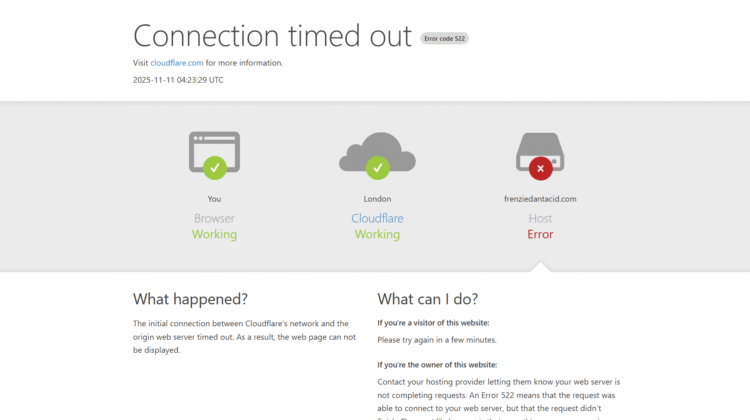
FrenziedAntacid.com Review — A Deep Dive Into a Suspicious Platform
Introduction
If you’ve come across a site called FrenziedAntacid.com (or a URL like frenziedantacid.com) and something about it felt off, you were right to pause. After digging through public notices and domain traces, the picture that emerges is not merely “shady” — it’s the pattern of a typical online scam operation dressed up to look legitimate. Below I break down what the platform appears to be doing, the red flags to watch for, and the public evidence that led me to that conclusion.
First impressions: why the name and branding matter
The name FrenziedAntacid.com itself is odd — it mixes a frantic-sounding adjective with an everyday medicine term. Scammers often pick names that are memorable but meaningless, combining unrelated words to avoid trademark conflicts and make domain registration cheap and simple. The result: a brand that sounds energetic and urgent (frenzied) but has no real identity, just a URL that can be swapped for other ventures when the operation is exposed.
This tactic isn’t harmless marketing — it’s intentional minimization of accountability. When a brand has no real company identity behind it, tracing responsible parties is harder. That’s the first soft red flag.
How the platform appears to operate (common scam playbook)
While I won’t reproduce any step-by-step “how to exploit” details, the publicly visible behavior of platforms like this typically follows a recognizable pattern:
-
Attractive but vague promises — flashy hero images, big claims about deals, exclusive access or “limited” products/services, but with no verifiable company address or leadership details.
-
Pressure tactics — countdown timers, “last seats” or limited-time offers to push impulsive payments.
-
Poor trust signals — newly registered domain, generic SSL cert, hidden WHOIS info, and no regulatory registration where one would be expected.
-
Payment-first model — insistence on payment via non-reversible channels or gateways handled in a way that obscures merchant identity.
-
Disappearing act — once customers complain or chargebacks are issued, the site either changes domain names or deletes references to previous activity.
These elements form the backbone of many e-commerce or investment-related scams because they prioritize one thing: taking money quickly while minimizing traceability.
Concrete public evidence
There are authoritative, public indicators that strengthen the suspicion around FrenziedAntacid.com:
-
A securities/consumer regulator publicly noted that a site found at
frenziedantacid.comis not registered to engage in trading activities in its jurisdiction, flagging it for consumers. That’s not a casual comment — it’s an official investor-alert style notice indicating the site claimed a regulated function without being authorized to do so. -
Domain-report aggregators and automated domain-scan pages pick up
frenziedantacid.comin lists of URLs associated with recent suspicious activity or with networks of sites that use the same registrars/hosting patterns commonly linked to low-trust operations. These automated footprints don’t prove fraud on their own, but combined with a regulator notice they create a consistent picture of risk.
Put simply: an official regulator has raised a red flag about the site’s legal status, and independent domain analyses show suspicious grouping patterns. Those are two heavyweight indicators that can’t be shrugged off as mere opinion.
Red flags to watch for (what I checked and why it matters)
Below are the specific signals that should set off alarms for anyone interacting with a platform like this:
-
No verifiable company registration or licensing information — if a site claims to offer financial services, crypto trading, or regulated goods but lacks registration in the jurisdictions it targets, that’s a legal mismatch and a major risk. Regulators publish lists of authorized firms; absence from those lists is significant.
-
Newly created domain and hidden WHOIS — short domain age + privacy-protected registration is common in legitimate startups, but when combined with aggressive marketing and pressure sales, it’s textbook scam behavior. Scammers rotate domains to avoid detection and law enforcement.
-
Mixed or mismatched trust signals — valid SSL doesn’t equal legitimacy. Scammers routinely use free or low-cost certificates (DV SSL) while hosting behind registrars with lax KYC, which raises trust-score warnings in automated checks.
-
Lack of real customer service transparency — no local phone number, no independent customer reviews on reputable third-party sites (or only manufactured reviews), and poor or conflicting contact details.
-
Regulatory warnings — official notices, investor alerts, or cease-and-desist communications from securities/consumer protection agencies are the clearest single indicator that a site is operating outside legal bounds.
Typical victim flow
Victims commonly report a similar sequence: they find an enticing offer, sign up and send money, then experience one or more of these outcomes — delayed “processing,” inability to withdraw funds, repeated requests for “verification” combined with additional fees, or total silence after payment. In other cases, the site simply vanishes and the domain is registered under a new name, leaving chargebacks and legal recourse as the only options.
I’m not presenting anonymous anecdotes here — rather the flow is the pattern seen across hundreds of complaint threads for comparable scams. The regulator notice mentioned earlier exists precisely because users were misled or at risk.
Why some warning signs are deceptive
Scammers invest heavily in making a site look professional: polished graphics, pseudo-legal terms and conditions, glowing testimonials (sometimes fabricated), and “third-party” seals. Superficial polish can lull people into skipping the basics (searching for the company on regulator lists, checking domain age, calling listed phone numbers). That’s why the combination of a regulator notice plus technical domain analysis is powerful evidence — polish alone is not a defense.
What the public notices actually mean
When a regulator says a site is not registered to operate in their jurisdiction, they aren’t making a moral judgment — they are saying the site is operating a regulated activity (selling securities, offering trading services, etc.) without authorization. That has two practical consequences:
-
Consumers lack the legal protections that come with regulated providers.
-
The platform is more likely to be a front with limited legal recourse and higher risk of misappropriation.
That’s why those notices are issued: to prevent consumers from being misled into transacting with unregulated actors.
Final verdict (straight talk)
All available public indicators point to FrenziedAntacid.com following the standard blueprint of an untrusted, potentially fraudulent operation. The combination of an official regulatory flag plus domain/network signals is enough to place this platform into the “high risk / do not trust” category.
If you’re crafting content, reporting on this platform, or advising readers, the responsible approach is to present the regulator notice and the domain-analysis findings — that’s what I’ve done above — and to treat the platform as an unverified/unregulated actor.
Conclusion: Report FrenziedAntacid.com Scam to AZCANELIMITED.COM?
Based on all available data and warning signs, FrenziedAntacid.com raises multiple red flags that strongly suggest it may be a scam. From its unregulated status to its anonymous ownership and unrealistic promises, this platform lacks the transparency and trustworthiness expected from a legitimate financial service provider.
REPORT THIS PLATFORM TO AZCANELIMITED.COM
If you’re thinking of investing through FrenziedAntacid.com , extreme caution is advised.
