
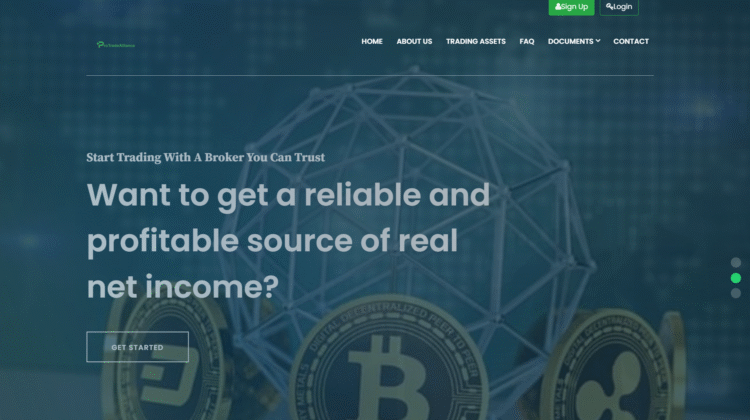
ProTradeAlliance.com Review — Fraudulent Trading Platform
Introduction
In the crowded marketplace of online trading platforms and “capital growth” services, slick marketing often hides shaky foundations. If you’ve encountered ProTradeAlliance.com—through an ad, a pushy account manager, or a glowing testimonial—this review aims to give you a clear, practical framework for judging whether the platform is safe, what warning signs to watch for, and what to do if you’re already involved.
I won’t make legal conclusions about intent or criminality. Instead, this post focuses on specific behaviors and operational features that historically indicate a high-risk or fraudulent operation. When several of these red flags appear together, the probability of serious problems goes up dramatically.
What ProTradeAlliance.com purports to be
Marketing copy for platforms like this typically promises simple, high returns through trading strategies, automated signals, managed accounts, or exclusive “insider” access. Package that with VIP account tiers, personal account managers, and “limited-time” bonuses, and the result is an appealing narrative: professional service, institutional-grade returns, minimal effort.
That narrative is persuasive. But persuasion is not proof. Before you transfer money, check how the company actually operates behind the marketing.
Primary red flags to watch for
Below are the most important warning signs that commonly appear with risky trading platforms. Finding multiple items on this list in one operation should be treated as a serious warning.
-
No verifiable regulation or licensing. Legitimate brokers clearly display regulator names, licence numbers, and jurisdictional details that can be independently verified through the regulator’s website or public database. If such details are missing, inconsistent, or unverifiable, treat that as a major concern.
-
Opaque company identity. Missing physical address, corporate registration, named executives, or contradictory company data are signs of opacity. Companies that can’t or won’t show who they are often make it very difficult to pursue legal redress later.
-
Extremely high or guaranteed returns. Promises of consistent high returns with little or no downside are unrealistic and are a classic lure. All trading carries risk—no credible firm promises large returns without commensurate risk disclosure.
-
Pressure to deposit quickly. Limited-time offers, pressure from account managers, or messaging that you’ll miss out if you don’t fund an account immediately are classic high-pressure sales tactics used to short-circuit due diligence.
-
Large minimum deposits and tiered “unlock” structures. Platforms that require large initial deposits or say you must deposit more to “unlock” profits or higher withdrawal tiers are risky. Legitimate brokers let you withdraw according to clear, published terms without surprise top-ups.
-
Complicated or inconsistent withdrawal rules. Excessive verification hurdles, unexplained fees, long unexplained delays, or requests to pay “processing fees” to release funds are common signals that withdrawals may be obstructed.
-
Personalized outreach via informal channels. Communication that moves quickly off a website into WhatsApp, Telegram, private email, or social-media DMs and becomes increasingly personal can be a step toward social engineering and pressure.
-
Fake or bought reviews and testimonials. Marketing testimonials that are generic, repeated across different names, or impossible to verify should be treated skeptically.
-
Young domain, minimal online footprint. Newly created websites, low trust scores, or an absence of independent news, audit, or media coverage can indicate a brand-new operation created to attract funds and then disappear.
-
Requests to move funds off-platform or to third-party accounts. Any instruction to send money to private bank accounts, personal wallets, or unrelated payment services rather than through the platform’s documented payment channels is a major red flag.
Common scam mechanics — how problems typically escalate
Understanding how these operations usually behave helps you spot trouble early.
• Small initial “wins.” Many risky platforms allow small withdrawals at first to build confidence. Once you deposit more, withdrawal requests suddenly face obstacles.
• Verification and fee stalling. “KYC” or “AML” verification becomes a moving target—platforms ask for more documents or payment of “taxes” or “processing fees” and then delay.
• Profit unlocking demand. Operators may claim profits are not available until an additional deposit is made to cover “regulatory fees” or “insurance.”
• Domain hopping. When pressure mounts or regulators get involved, the site or brand may change domain names and reappear under different branding.
• Recovery scams. After a loss, victims are often targeted by third-party “recovery services” that demand upfront fees and deliver nothing.
If you’re considering depositing: an essential checklist
If you still plan to proceed after reading this, do not ignore these steps—treat them as minimum due diligence.
-
Verify licensing and regulator details on the regulator’s website.
-
Confirm the company’s legal entity, registration number, and physical address with independent corporate registries.
-
Ask for audited financial statements or independent proof of custody of client funds.
-
Read the terms and conditions carefully—specifically the withdrawal, fee, and dispute resolution provisions.
-
Test customer support with non-urgent but substantive questions and note responsiveness and quality of answers.
-
Start with the smallest practical amount you can afford to lose, and test withdrawals before adding funds.
-
Don’t accept pressure from account managers or “limited offer” messaging; insist on written documentation of any claims.
What to do if you already deposited and face problems
If you suspect you’ve been defrauded or are struggling to withdraw funds, act quickly and cautiously.
-
Preserve all records. Save emails, chats, payment receipts, screenshots of your account ledger, and any communication. These are critical for banks, law enforcement, and regulators.
-
Contact your payment provider immediately. If you used a credit card, bank transfer, or payment service, ask them about chargeback or reversal options and provide documentation. Timing matters for chargebacks.
-
Report to local law enforcement and your financial regulator. Even if the platform is offshore, local authorities can take a report which is useful for tracing and for later legal work.
-
File a complaint with consumer protection agencies. Many countries have consumer financial complaint channels that can escalate the issue.
-
Consider legal counsel. A lawyer experienced in financial fraud can advise on civil actions, freezing orders, or international tracing—though success is never guaranteed.
Recovery warnings —
After one loss, people are vulnerable to recovery offers. Be extremely wary.
-
Don’t share more personal data or account credentials with anyone claiming to “help” recover funds. That can expose you to identity theft.
-
Verify credentials independently. Demand proof of standing, client references, and a verifiable office address. Check for public disciplinary records.
-
If it sounds like a sure thing, it isn’t. Anyone promising guaranteed recovery of lost funds is almost certainly running a scam.
End Note
I can’t—and won’t—label ProTradeAlliance.com or any named platform as criminal without independently verifiable evidence. But if a company displays many of the behaviors described above, the prudent approach is to assume your money is at risk and to act accordingly: document everything, contact your payment provider, and report the issue to authorities.
Conclusion: Report ProTradeAlliance.com Scam to AZCANELIMITED.COM?
Based on all available data and warning signs, ProTradeAlliance.com raises multiple red flags that strongly suggest it may be a scam. From its unregulated status to its anonymous ownership and unrealistic promises, this platform lacks the transparency and trustworthiness expected from a legitimate financial service provider.
REPORT THIS PLATFORM TO AZCANELIMITED.COM
If you’re thinking of investing through ProTradeAlliance.com , extreme caution is advised.
