
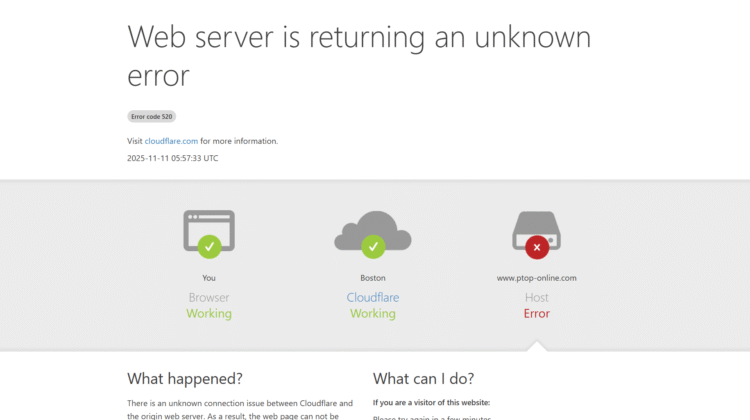
PtoP-Online.com Scam : A Deep-Dive Review
Introduction
When you first encounter PtoP-Online.com, it may look like an investment/broker platform: slick sign-up pages, a client portal, promises of returns, and a smooth onboarding flow. That polish is part of the problem — many fraudulent operations invest in a professional façade so victims feel comfortable depositing funds.
Concerning details reported by users and site-check services include:
-
A registration page that restricts U.S. tax residents or U.S. citizens from signing up (odd for a legitimate global financial service).
-
Sparse or inconsistent corporate details (no clear, verifiable company headquarters or regulated-entity identifiers displayed).
-
Numerous third-party review pages and consumer complaint sites showing overwhelmingly negative feedback and safety alerts.
Those initial items don’t prove criminal intent, but together they match the textbook signs of unregulated, high-risk platforms that primarily aim to collect deposits while remaining opaque about real ownership and legal protections.
Common complaints and patterns reported by users
From dozens of user reports aggregated across review sites and consumer complaint pages, a pattern emerges. Here are the recurring themes people describe:
-
Difficulty withdrawing funds
Users report that once they request withdrawals, the platform imposes sudden fees, “verification” hurdles, or arbitrary rules that delay payouts. Some say withdrawals are outright refused. -
Pressure to deposit more
Members describe persistent messages, calls, or chat prompts encouraging further deposits with promises of “unlocking bonuses” or “raising VIP status” — classic escalation tactics used to keep victims investing. -
Account takeovers or trading anomalies
Several complaints mention unexplained losses, “trades” they didn’t place, or account activity that suggests manual manipulation on the back end. -
Refusal to honor refunds and disappearing support
Once users push back, support becomes evasive, response times lengthen, and sometimes the company’s contact channels vanish. -
Fake regulation claims or missing regulation
The platform either claims vague oversight or displays certificates that are hard to verify. Legitimate financial firms typically list licensing authorities and registration numbers that can be checked — when those are absent or false, alarm bells should ring.
Taken together, these consistent reports point to systemic problems rather than isolated misunderstandings.
How the alleged scam typically operates
Based on user descriptions and how similar fraudulent platforms operate, the likely mechanics are:
-
Attractive entry — low minimum deposit, flashy returns, or promotions to make the platform seem accessible.
-
Cultivation — friendly account managers or automated messages build trust and encourage larger deposits.
-
Grooming — victims are shown fabricated dashboards or fake “profits,” which are sometimes reversed when withdrawal is requested.
-
Obstacle deployment — identity verification, “tax” or “compliance” fees, or new required minimums are introduced to justify withholding funds.
-
Exit or evasion — when victims demand funds, the platform delays, then withdraws support, changes domain names, or vanishes.
This is a common script for investment/forex/crypto fraud and is consistent with what many people describe happening with PtoP-Online.com.
Red flags you should never ignore
If you’re researching a platform, watch for these warning signs (many are present in complaints about PtoP-Online.com):
-
The company explicitly disallows U.S. residents or states odd geographic limits without clear legal explanation.
-
No verifiable regulatory license or registration number displayed.
-
Contact details are a web form or anonymous email rather than a verifiable business address and phone.
-
Almost exclusively negative reviews with similar complaint narratives (withdrawal denial, pressure to deposit more).
-
Pushy account managers offering guaranteed returns or quick profits — financial markets never guarantee returns.
-
Sudden requests for more money to process a withdrawal (additional “verification fees,” “tax” payments, or “insurance” charges).
If you see several of these together, treat the offering like a high-probability scam and proceed with extreme caution.
Why labeling matters — a note on certainty and evidence
It’s important to differentiate between reports and patterns and a legal finding of fraud. This review summarizes the experiences and safety-checks many users and watchdog services have published: overwhelmingly negative feedback, site-safety scores, and consistent complaint patterns. Those combined factors justify a strong consumer warning and the label “scam” in everyday language, but only regulators or courts can make formal legal determinations.
Recovery warnings — what not to do
If you’ve lost money, the instinct to “get it back at any cost” is understandable. Beware of the following traps:
-
Don’t pay a “recovery” company that demands an up-front fee. There is a whole industry of recovery services that charge large sums and deliver little or nothing. Legitimate legal or recovery professionals typically work on clear, measurable terms — and you should verify their reputation independently.
-
Avoid “chargeback mills” that require you to sign over funds or provide sensitive credentials. Scammers sometimes pose as recovery firms to harvest more personal data.
-
Don’t hand over extra personal documents to strangers. Scammers may ask for more IDs or banking details under the pretext of recovery — that can lead to identity theft.
-
Be cautious about “settlement” offers from third parties; if something sounds too good to be true, it probably is.
Instead, focus on steps that escalate through official and reversible channels (see next section).
Practical steps if you were affected
-
Immediately document everything. Save emails, screenshots of the dashboard, transaction receipts, chat logs, names of account managers, and any phone numbers or payment references.
-
Contact your bank or card issuer. Ask about chargebacks or disputes for the specific transactions. Provide the documentation you saved.
-
Report to consumer protection agencies. File complaints with your country’s consumer protection authority and any financial regulator that covers online investment/forex/crypto services.
-
File a formal complaint with payment processors. If you paid by wire, crypto, or third-party payment service, inform them of potential fraud.
-
Report identity theft if you shared sensitive documents. If you gave passport numbers, social security/tax numbers, or similar data, consider a credit freeze and identity theft alerts.
-
Use official law enforcement channels. Local police and national cybercrime units will accept reports and can escalate patterns into investigations if there are multiple victims.
These steps cost nothing to initiate and preserve the evidence you’ll need for any future recovery or legal action.
Final verdict — treat PtoP-Online.com with extreme suspicion
Between multiple one-star reviews, site safety assessments, and consistent complaint patterns (blocked withdrawals, pressured deposits, disappearing support), the empirical picture is troubling. If you currently hold funds with PtoP-Online.com, protect your data and prioritize documentation and official dispute channels over risky “recovery” shortcuts. If you’re only considering signing up, the safer choice is to walk away and choose a trustworthy, regulated provider whose licensing and corporate details can be independently verified.
Quick checklist: should I engage with PtoP-Online.com?
-
Do you see verifiable regulatory ID and a company address? — If no, walk away.
-
Are withdrawals straightforward and documented? — If no, treat as high risk.
-
Do independent review sites show consistent, specific complaints? — If yes, avoid.
Stay skeptical, protect your personal and financial information, and lean on official banking and regulatory routes if you’ve already been affected. If you’d like, I can draft a template complaint letter you can send to your bank or to a regulator — no legalese, just the facts laid out clearly.
Conclusion: Report PtoP-Online.com Scam to AZCANELIMITED.COM?
Based on all available data and warning signs, PtoP-Online.com raises multiple red flags that strongly suggest it may be a scam. From its unregulated status to its anonymous ownership and unrealistic promises, this platform lacks the transparency and trustworthiness expected from a legitimate financial service provider.
REPORT THIS PLATFORM TO AZCANELIMITED.COM
If you’re thinking of investing through PtoP-Online.com , extreme caution is advised.
